How Much Light Does a Pothos Need Indoors?
Pothos is one of the easiest houseplants to grow. It has beautiful green or variegated leaves, long trailing vines, and simple care needs. This makes it a good choice for both new and experienced plant owners.
The scientific name of the common pothos plant is Epipremnum aureum. It belongs to the Araceae family and is also called golden pothos devil’s ivy devil’s vine and ivy arum. It is an evergreen climbing plant that is often grown indoors in pots or hanging baskets.
This Pothos PlantInfo guide explains everything you need to know in simple words. You will learn about light watering soil fertilizer pruning propagation common problems pests popular pothos varieties and pet safety.
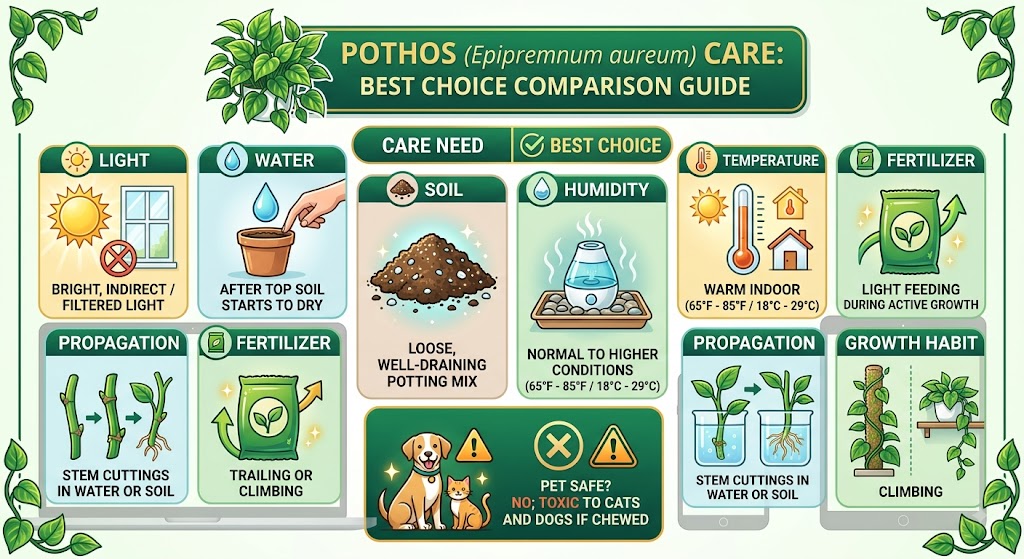
Pothos Plant Care at a Glance
| Care Need | Best Choice |
|---|---|
| Scientific Name | Epipremnum aureum |
| Common Names | Pothos, Golden Pothos, Devil's Ivy |
| Plant Family | Araceae |
| Plant Type | Evergreen climbing or trailing houseplant |
| Light | Bright, indirect or filtered light |
| Water | Water after the top soil starts to dry |
| Soil | Loose, well-draining potting mix |
| Humidity | Normal to higher indoor humidity |
| Temperature | Warm indoor conditions |
| Fertilizer | Light feeding during active growth |
| Propagation | Stem cuttings |
| Growth Habit | Trailing or climbing |
| Pet Safe? | No, toxic to cats and dogs if chewed |
How Much Light Does a Pothos Need Indoors?
Bright indirect light is best for most pothos plants.
Place your pothos close to a bright window where the leaves receive plenty of light without sitting in strong direct sun for long periods.
A sheer curtain can help soften very strong sunlight.
Pothos can live in lower light which is one reason it is common in offices and homes. However, surviving is different from growing at its best.
In very low light:
- new growth may become slower
- spaces between leaves can become longer
- colorful varieties may lose some variegation
- the plant may look thin over time.
North Carolina Extension notes that pothos can survive long periods in low light while brighter indirect light supports better growth and variegation.
How Often Should You Water a Pothos?
There is no perfect watering day that works for every pothos.
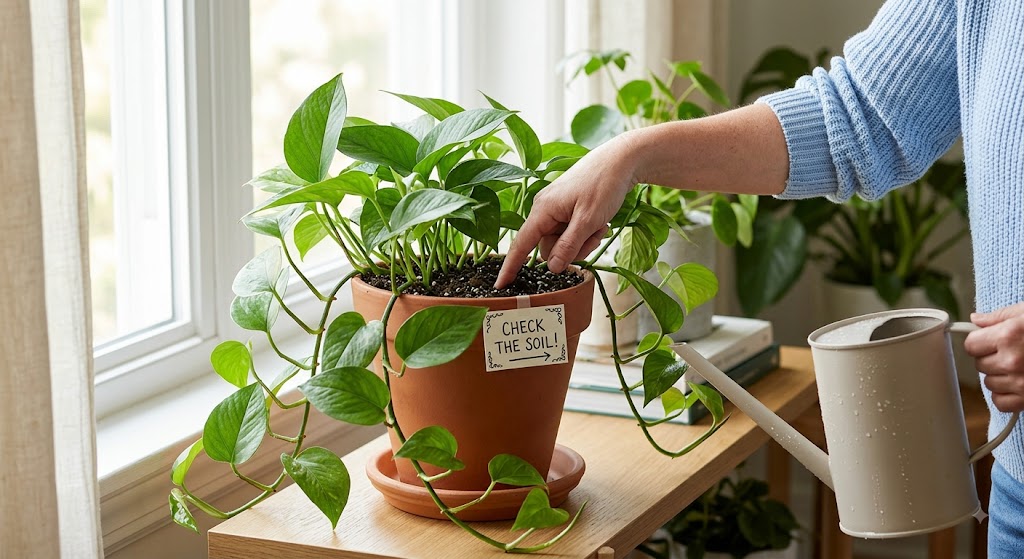
Instead of watering every Monday or every seven days check the soil first.
Push your finger about one or two inches into the potting mix. If that area still feels wet wait. If it feels dry the plant may be ready for water.
When you water:
- Pour water slowly over the soil.
- Wet the root area well.
- Allow extra water to leave through the drainage holes.
- Empty water that collects in the saucer.
Do not allow the pot to sit in water for a long time.
How quickly the soil dries depends on the season pot size light temperature humidity and type of potting mix. A pothos near a bright window may need water sooner than the same plant sitting in a darker room.
This is why checking the soil works better than following a strict calendar.
Signs Your Pothos Needs Water
A thirsty pothos may develop slightly drooping or softer leaves.
Dry soil is a better clue than drooping alone because leaves can droop for more than one reason.
If the soil is very dry and the leaves look limp give the plant a thorough drink and allow the extra water to drain.
Do not make a habit of waiting until the plant becomes severely wilted. Regular soil checks are easier on the plant.
Signs You May Be Overwatering Your Pothos
Too much water is one of the most common pothos care problems.
Watch for:
- soil that stays wet for many days
- several yellow leaves appearing together
- soft or dark stems near the soil
- an unpleasant smell from the pot
- roots that look brown, black, or mushy
North Carolina Extension lists root rot and darkened leaf margins among problems that can occur with overwatering.
If you think the plant is staying too wet check the drainage holes and soil before simply reducing the amount of water.
Best Soil for a Pothos Plant
Pothos roots need both moisture and air.
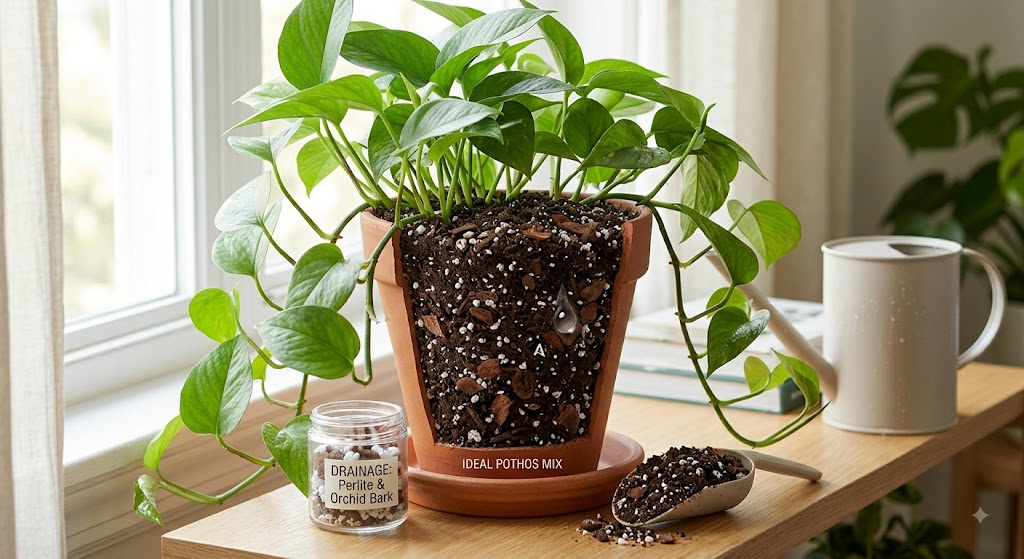
A loose indoor potting mix that drains well is usually a good choice. Heavy garden soil is not ideal for an indoor pot because it can become dense and hold water around the roots.
You can use a quality houseplant potting mix. If the mix feels very heavy adding a drainage-friendly material such as perlite or fine orchid bark can help keep it more open.
The goal is simple: water should reach the roots but should not remain trapped around them for long periods.
Does a Pothos Pot Need Drainage Holes?
A pot with drainage holes is the safest choice for beginners.
Drainage holes allow extra water to escape. This makes it much easier to water the whole root ball without leaving the bottom of the soil soaked.
Decorative pots without holes can still be used as outer covers. Keep your pothos inside a smaller nursery pot with drainage, then place that pot inside the decorative container.
After watering make sure extra water is not left standing inside the outer pot.
What Temperature Does Pothos Like?
Pothos is a tropical plant so it prefers warm indoor conditions.
A normal comfortable room temperature usually works well. Keep the plant away from freezing windows cold winter drafts, and strong blasts from heating or air-conditioning vents.
Clemson Extension describes pothos as a tropical plant that performs well under warm indoor conditions and prefers warmer daytime temperatures.
Sudden temperature changes are usually more stressful than small normal changes between day and nigh
Pothos Humidity Requirements
Pothos enjoys humidity, but most plants can grow perfectly fine in normal household air.
🏠 Household Air
Pothos is adaptable and thrives well under normal room air conditions, making it an easy-care indoor plant.
🌿 Humid Environment
You may notice better growth in a moderately humid room, especially if your home becomes very dry during winter.
💧 Extreme Dry Air Solutions
If the air is extremely dry, try these solutions:
- Use a room humidifier near the plant.
- Group houseplants together to create a humid microclimate.
⚠️ Important Rule: Humidity should not replace proper watering. Wet soil and humid air are two completely different things!
How to Propagate Pothos in Water
Pothos is easy to propagate from a stem cutting.
Choose a healthy vine and find a node. Cut below that node with clean scissors or pruning shears.
A good cutting should have at least one healthy node because roots grow from the node.
Remove any leaf that would sit underwater.
Place the node in a clean glass or jar of water while keeping the remaining leaves above the water.
Put the container in bright indirect light.
Change the water when it becomes cloudy or dirty. Once the cutting has developed a healthy group of roots, it can be moved into potting soil.
Stem cutting is a recommended propagation method for Epipremnum aureum and pothos vines root readily in water.
Pothos PlantInfo FAQs
Is pothos a good plant for beginners?
Yes. Pothos is widely considered an easy houseplant because it tolerates different indoor conditions and does not need complicated care. Penn State describes it as a hardy and easy-to-grow houseplant suitable for beginners.
Does pothos need sunlight?
Pothos needs light but bright indirect light is usually better than strong direct sunlight. It can tolerate lower light although growth and variegation may become weaker.
How often should I water my pothos?
Do not depend on a fixed number of days. Check the soil and water after the upper part of the potting mix has dried.
Can pothos grow in an office?
Yes, provided it receives enough natural or artificial light. Pothos is commonly grown in offices because it can tolerate lower-light conditions better than many houseplants.
Should I mist my pothos every day?
Daily misting is not required for normal pothos care. Focus first on suitable light, correct watering, healthy soil, and drainage.
