Pothos Plant Latest Information 2026
The pothos plant made your life colourful and brings happiness into your life. Its heart-shaped leaves, long vines and easy care make it a popular choice for new plant owners and plant collectors. It is a vine, not a tree; it climbs on trees in forests and moss poles in homes.
This website is a complete learning centre for pothos lovers. You will find clear guides about watering, light, soil, fertiliser, propagation, pruning, varieties and common problems. Each guide uses simple steps, practical tips and trusted plant information.
Whether you have your first golden pothos or a growing collection, our goal is to help you understand what your plant needs and why.
Primary button: Explore Pothos Care Guides
Secondary button: View Pothos Varieties
What Is a Pothos Plant
The common pothos is known by the scientific name Epipremnum aureum. It belongs to the Araceae plant family and is also called devil’s ivy, golden pothos, or ivy arum. It is a tropical climbing vine with flexible stems and attractive leaves.
Pothos is often treated as a low-maintenance houseplant because it can handle a range of indoor conditions. It prefers bright, indirect light, but it can survive in lower light. It grows best in a loose potting mix that drains well, and the soil should be allowed to dry partly between waterings. NC State Extension describes pothos as an easy plant that prefers indirect light and a well-drained growing medium.
Although this plant is forgiving, it still needs balanced care. Too much water can damage the roots. Harsh sunlight may burn or fade the leaves. Very low light can slow growth and reduce variegation.
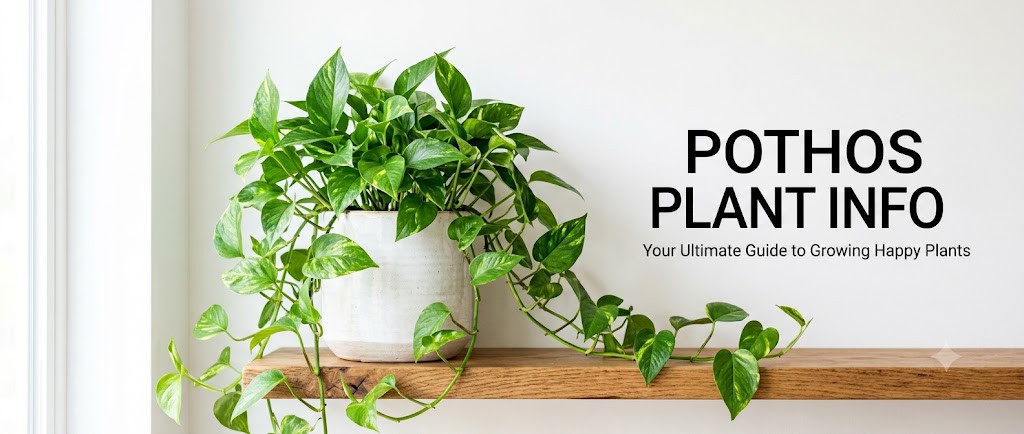
Learn How to Care for Pothos
Bright filtered light usually produces stronger growth and clearer leaf patterns. A place near an east-facing window can work well. A plant near a brighter south-facing or west-facing window may need a thin curtain to soften direct sunlight.
Green pothos types can often cope with lower light better than highly variegated types. In weak light a variegated plant may grow more slowly and produce leaves with less colour.
Water Based on the Soil
uMany pothos problems begin with watering too often. Instead of watering on the same day every week, touch the soil first.
When the upper layer feels dry, water slowly until a little water drains from the bottom. Empty any water left in the saucer or decorative pot.
A thirsty plant may develop soft, drooping leaves. An overwatered plant may show yellow leaves, wet soil, an unpleasant smell or soft roots.
Use Airy Well-Draining Soil
Pothos roots need both moisture and oxygen. Heavy soil that stays wet for a long time can increase the risk of root rot.
A suitable mix should hold some moisture while allowing extra water to leave the container. Many plant owners use indoor potting mix with added perlite, fine bark or another material that improves airflow.
The pot should have at least one drainage hole. A decorative container without drainage can be used as an outer cover, but the plant should remain inside a draining nursery pot.
Feed Without Overdoing It
Fertiliser can support new leaves and vines, but more fertiliser does not always mean faster growth.
Too much fertiliser can leave salts in the soil and damage the roots. Use a balanced houseplant fertiliser according to the product label during active growth. Reduce feeding when the plant is growing very slowly.
Possible signs of excess fertiliser include brown leaf edges, a white crust on the soil or weak roots.
Flushing the soil with clean water may help remove some built-up salts, but the container must drain properly.
Common Pothos Problems and What They Mean
Pothos propagation is a simple way to make a new plant from a healthy vine.
The cutting needs at least one node because roots develop from this area. A node is the small raised point where a leaf or aerial root joins the stem.
You can root a cutting in water or place it directly in a light growing mix.
Water propagation makes root development easy to see. Soil propagation avoids moving the cutting from water into soil later. Both methods can work when the cutting is healthy and kept in a warm place with indirect light.
Several rooted cuttings can be planted together to create a fuller-looking pot.
Our step-by-step propagation guide explains:
- Where to cut the vine
- How to identify a healthy node
- Which leaves to remove
- How often to replace the water
- When to move a cutting into soil
- How to care for a newly propagated plant
A struggling plant usually gives visible clues. The best solution starts with checking its complete growing setup instead of treating only one damaged leaf.
Yellow leaves may be connected to excess water, poor drainage, root stress, normal leaf ageing, or a sudden environmental change.
Brown tips can appear when the plant becomes too dry, fertiliser salts build up or the roots are stressed.
Pale leaves and large spaces between leaves often point to weak light. Faded, dry or scorched patches may develop after exposure to strong direct sunlight.
When the soil remains wet and the roots become dark, soft or unpleasant-smelling, root rot may be present. Damaged roots should be removed before the plant is placed in fresh, well-draining soil.
Avoid fertilising while damaged roots are recovering.
Explore Our Problem-Solving Guides
Yellow Pothos Leaves: Learn the possible causes and how to inspect the soil and roots.
Brown Spots and Tips: Find out whether dryness, sunlight, fertiliser or root stress may be responsible.
Drooping Leaves: Learn how to tell the difference between thirst and overwatering.
Small Leaves: Improve light nutrition, pruning and climbing support.
Leggy Vines: Learn how pruning and better light may support fuller growth.
Pothos Root Rot: Follow the steps for inspecting, trimming and repotting unhealthy roots.
Pothos Pests: Identify spider mites, mealybugs, scale insects and other common houseplant pests.
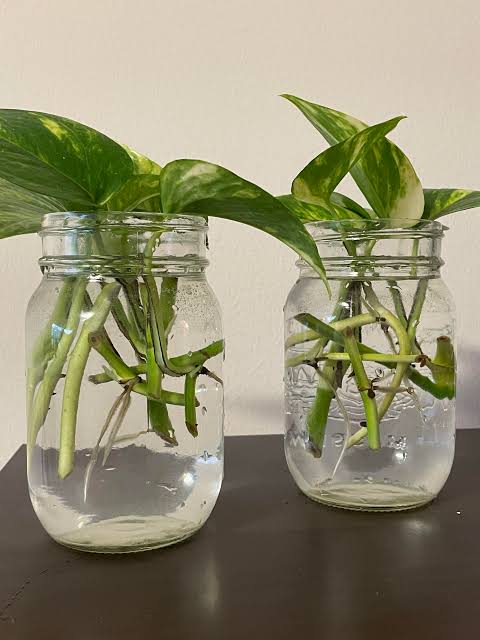
How to Propagate Pothos in Water (Step-by-Step)
1. Choose a Healthy Cutting
Select a healthy Pothos vine and cut just below a node. Make sure the cutting has at least one or two nodes because new roots grow from these points.
2. Place the Cutting in Water
Put the cutting in a clean glass jar filled with room-temperature water. Keep the nodes underwater but make sure the leaves stay above the water.
3. Provide Bright Indirect Light
Keep the jar in a warm place with bright, indirect sunlight. Avoid direct sun because it can damage the cutting and heat the water.
4. Wait for Root Growth
Give your cutting time to develop roots. Small roots usually begin appearing after a few weeks depending on the plant’s condition and growing environment.
5. Change Water Regularly
Replace the water every 5 to 7 days to keep it fresh and reduce the chance of bacteria affecting the cutting.
6. Transfer to Soil When Ready
Once the roots become strong and several inches long, move the cutting into a pot with well-draining soil and continue normal Pothos care.
Pothos Safe for Cats and Dogs
Pothos should be kept away from pets that may chew plants.
The ASPCA lists golden pothos as toxic to cats and dogs because it contains insoluble calcium oxalates. Chewing the plant can irritate the mouth and may cause drooling, vomiting or trouble swallowing. Contact a veterinarian promptly when a pet bites or eats part of the plant.
Place the pot on a secure high shelf or inside a room that pets cannot enter. A hanging basket is only safe when no leaves or vines hang within reach.
Pet owners may choose non-toxic plants for areas their animals can access. For example, the ASPCA classifies the spider plant as non-toxic to cats and dogs
Grow Pothos Upward or Let It Trail
Our goal is to make plant care easier, not more confusing.
We separate general advice from problems that need closer inspection. We avoid suggesting that one watering schedule or one product will work for every plant and every home.
The information on this page has been checked against reliable horticulture and animal safety references, including university extension resources and the ASPCA.
We explain the reason behind each care step so readers can make better decisions based on their own light soil pot temperature and climate.
No online guide can replace a local horticulturist, veterinarian or poison specialist when a serious plant or pet safety problem occurs.
Why Trust our Pothos Guides
At Pothos PlantInfo we focus on making plant care simple, practical and easy to understand. Our guides are created using reliable plant knowledge and carefully researched information to help beginners and plant lovers make better care decisions.
We avoid confusing advice and focus on clear steps that you can actually follow at home. From watering and lighting to propagation and common problems, our goal is to provide helpful guidance that supports your journey with Pothos plants.
We believe good plant care starts with honest information, simple explanations and a genuine passion for helping people grow healthier plants.
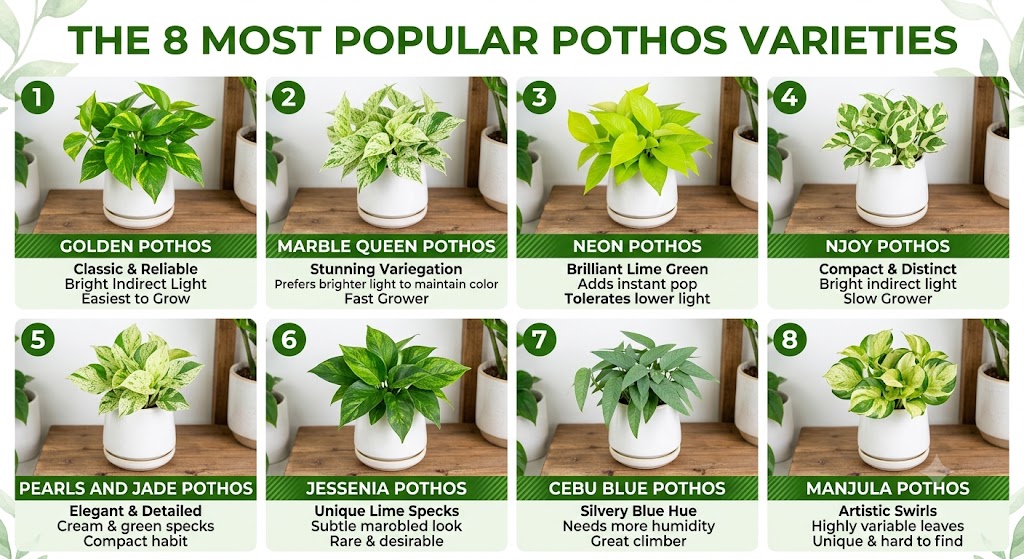
Pothos Varieties and Identification Guide
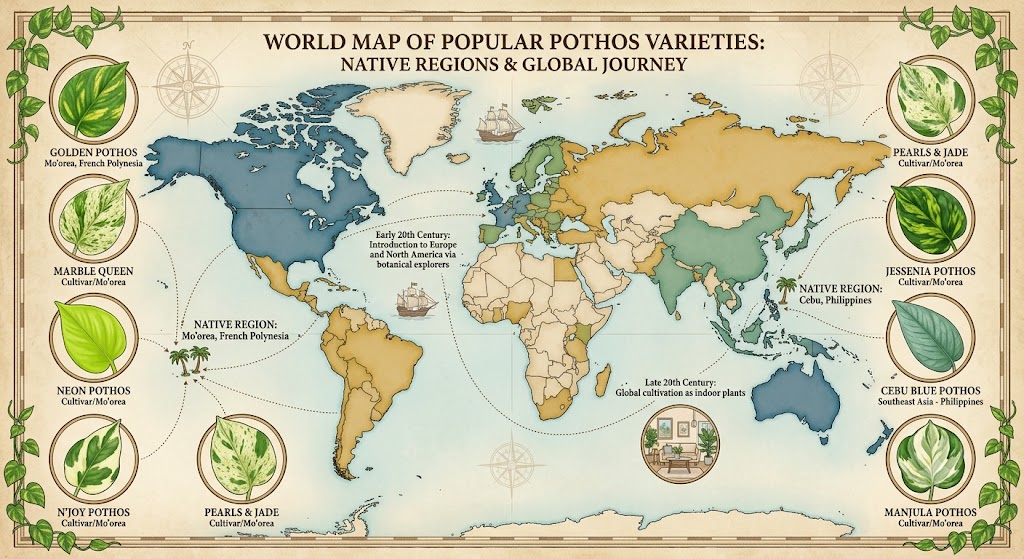
Pothos plants are famous for their beautiful variegation (the patterns, spots, and streaks on their leaves). Think of this as a quick visual map to help your readers instantly identify which Pothos they are looking at based on their leaf designs:
Variety Comparison Table
| Variety | Leaf Color and Pattern Map | The Vibe |
|---|---|---|
| Golden Pothos | Classic green base splashed with bright yellow and gold streaks. | The OG favorite. |
| Marble Queen | Heavy cream-white background with dark green speckles woven throughout. | Looks like a marble countertop. |
| Neon Pothos | Solid, electric lime-green with absolutely no patterns or spots. | Pure neon energy. |
| N'Joy Pothos | Small leaves with clean, distinct blocks of crisp white and solid green. | Neat, sharp borders. |
| Pearls & Jade | White and green patches, but with extra green dots scattered inside the white parts. | The freckled cousin of N'Joy. |
| Manjula Pothos | Wavy, curvy edges with a swirling mix of cream, silver, white, and green. | Looks like an oil painting. |
| Cebu Blue | Sleek, narrow, arrow-shaped leaves with a metallic silvery-blue tint. | The edgy, modern one. |
| Jessenia Pothos | Dark forest-green leaves lightly dusted with chartreuse or lime flecks. | Subtle and moody. |
Pothos Plant Care at a Glance
| Care Need | Best Starting Point |
|---|---|
| Light | Bright, indirect light |
| Water | Water when the upper soil feels dry |
| Soil | Loose, well-draining indoor potting mix |
| Pot | A container with drainage holes |
| Temperature | A warm room without cold drafts |
| Humidity | Average indoor humidity is usually suitable |
| Fertilizer | Balanced houseplant fertilizer during active growth |
| Pruning | Trim long or weak vines to support fuller growth |
| Support | Hanging basket, shelf, trellis, or moss pole |
Frequently Asked Questions About Pothos Plant
What is a Pothos plant?
Pothos is a popular indoor plant known for its beautiful heart-shaped leaves and easy-care nature. It can grow well in different indoor environments and is a great choice for beginners who want to add greenery to their homes.
How often should I water a Pothos plant?
A Pothos plant usually needs watering when the top inch of soil feels dry. Avoid keeping the soil constantly wet because overwatering can cause root problems. The watering schedule may change depending on light, temperature, and humidity.
Does Pothos need direct sunlight?
No, Pothos plants prefer bright, indirect light. They can tolerate lower light conditions, but too much direct sunlight may burn their leaves. A spot near a window with filtered light is usually ideal.
How can I propagate Pothos at home?
You can propagate Pothos by taking a healthy stem cutting with at least one node and placing it in water or soil. With proper light and care, new roots can develop and grow into a new plant.
Why are my Pothos leaves turning yellow?
Yellow leaves can happen because of several reasons, including overwatering, poor drainage, low light, or natural aging of older leaves. Checking the plant’s growing conditions can help identify the possible cause.