Pothos Care Guide
Pothos is a popular indoor plant with glossy heart-shaped leaves and long trailing vines. Its scientific name is Epipremnum aureum. It is also known as golden pothos and devil’s ivy.
Pothos plant care is simple, but the plant still needs suitable light, careful watering, and well-draining soil. A healthy pothos can grow in a hanging basket, trail from a shelf, or climb a support.
Quick Pothos Care Information
Pothos Care at a Glance
| Care Need | Suitable Condition |
|---|---|
| Light | Bright, indirect light |
| Water | When the upper soil feels dry |
| Soil | Loose and well-draining soil |
| Temperature | Warm indoor temperature |
| Humidity | Normal to moderately humid air |
| Fertilizer | Light feeding during active growth |
| Pruning | When vines become long or thin |
| Pot | A container with drainage holes |
Pothos grows best in filtered or bright indirect light. It can survive in low-light conditions, but its growth may become slower, and colorful varieties may lose some of their leaf patterns. Strong direct sunlight can damage or fade the leaves.
Light Requirements
Place your pothos near a window where it receives plenty of daylight without sitting in harsh afternoon sun. A thin curtain can help soften strong light.
A pothos can live in a darker room, but low light is not ideal for fast or full growth. The space between the leaves may become longer and the plant may produce smaller leaves.
Turn the pot every one or two weeks. This helps all sides receive light and keeps the plant from leaning in only one direction.
Watering a Pothos Plant
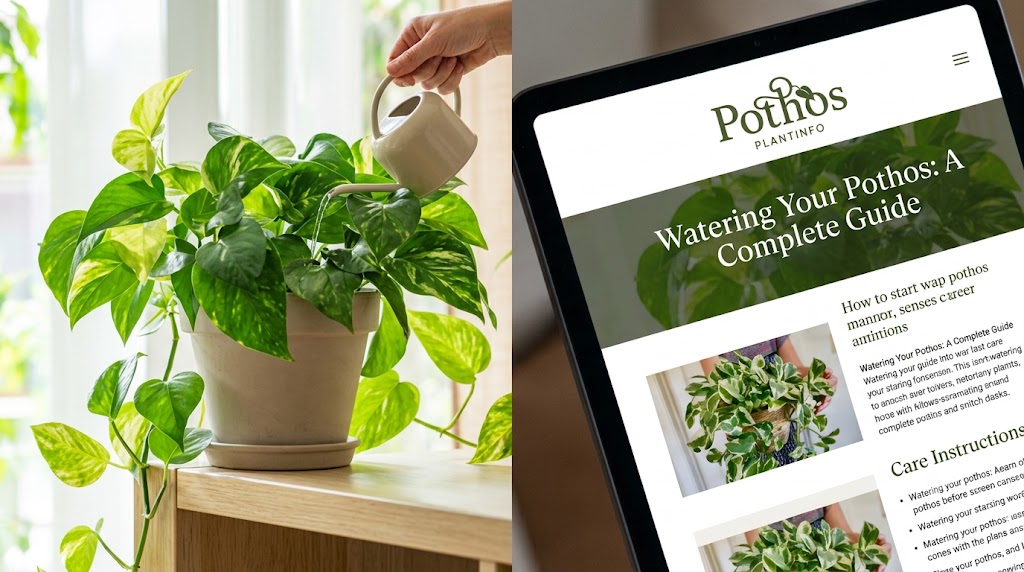
Check the soil before watering. Push your finger about one or two inches into the potting mix. Water the plant when the upper layer feels dry.
Pour water slowly until a small amount comes through the drainage holes. Allow the pot to drain fully and do not leave it standing in a saucer filled with water.
Do not follow a fixed watering day without checking the soil. A pothos in warm, bright conditions may dry faster than a plant in a cool or darker room. NC State and Wisconsin Extension both recommend allowing the growing medium to dry slightly between waterings.
Too much water can cause yellow leaves, black leaf edges, and root rot. Too little water may cause drooping, curling, and dry brown tips.
Best Soil and Pot
Pothos needs a loose potting mixture that allows water and air to move around the roots. A normal indoor potting mix can work well when it drains properly.
You can improve drainage by mixing potting soil with perlite and a small amount of orchid bark. Avoid heavy outdoor garden soil because it can become packed inside a container.
Always use a pot with drainage holes. A container without drainage can hold water around the roots and increase the risk of rot.
When repotting, choose a container only slightly larger than the old one. A very large pot holds more wet soil than the plant needs.
Temperature and Humidity
Pothos prefers warm and stable indoor conditions. Keep it away from cold windows, air conditioners, heating vents, and strong drafts.
Normal household humidity is often enough. However, a humidifier can help when indoor air is very dry. Pothos can tolerate different home conditions, but filtered light warmth and moderate humidity support better growth.
Fertilizing Pothos
Use a balanced liquid houseplant fertilizer during spring and summer when the plant is actively growing. A diluted amount is safer than a strong dose.
Do not fertilize dry soil. Water the plant first or apply fertilizer when the soil is slightly moist.
Pothos does not need heavy feeding. Too much fertilizer can leave salts in the soil and cause brown or black leaf tips. Extension guidance suggests light feeding every other month and reducing feeding during winter.
Pruning and Shaping
Cut long, weak, or empty vines with clean scissors. Make the cut close to a leaf or node. Pruning encourages fresh growth and helps the plant look fuller.
Healthy cuttings can be rooted and planted back into the same pot. This fills empty spaces and creates a bushier plant.
Pothos can also be trained to climb a moss pole, wooden support, or trellis. Its aerial roots help it hold onto surfaces. A climbing pothos may develop larger leaves when it receives suitable light.
Pothos Safety
Pothos contains insoluble calcium oxalates and is toxic to cats and dogs. Chewing it may cause mouth irritation, drooling, vomiting, or trouble swallowing. Keep the plant and fallen cuttings away from pets and small children. Contact a veterinarian when a pet has eaten the plant.
Final Care Tips
The main parts of pothos plant care are simple. Give the plant indirect light, allow the soil to dry partly, and use a pot with drainage.
Check the plant regularly instead of changing its care every day. Steady conditions will help it produce strong vines and healthy leaves.
FAQs – Pothos Plant Care
What is a Pothos plant?
Pothos is a popular indoor houseplant known for its beautiful heart-shaped leaves and easy-care nature. It is also called Devil’s Ivy and is commonly grown in homes and offices.
How often should I water my Pothos plant?
Water your Pothos plant when the top 1–2 inches of soil feel dry. Avoid overwatering because soggy soil can cause root rot.
What type of light does a Pothos plant need?
Pothos plants grow best in bright, indirect sunlight. They can also tolerate low-light conditions, but growth may become slower.
How do I care for a Pothos plant indoors?
To care for a pothos indoors, provide indirect light, well-draining soil, moderate watering, and a warm environment with good humidity.
Why are my Pothos leaves turning yellow?
Yellow leaves are often caused by overwatering, poor drainage, or insufficient light. Check the soil moisture and adjust your watering routine.
How fast does a Pothos plant grow?
Pothos is a fast-growing plant when given proper light, water, and nutrients. It can produce long vines within a short period during the growing season.