Pothos PlantInfo: Everything You Need to Know About Pothos Plant Care

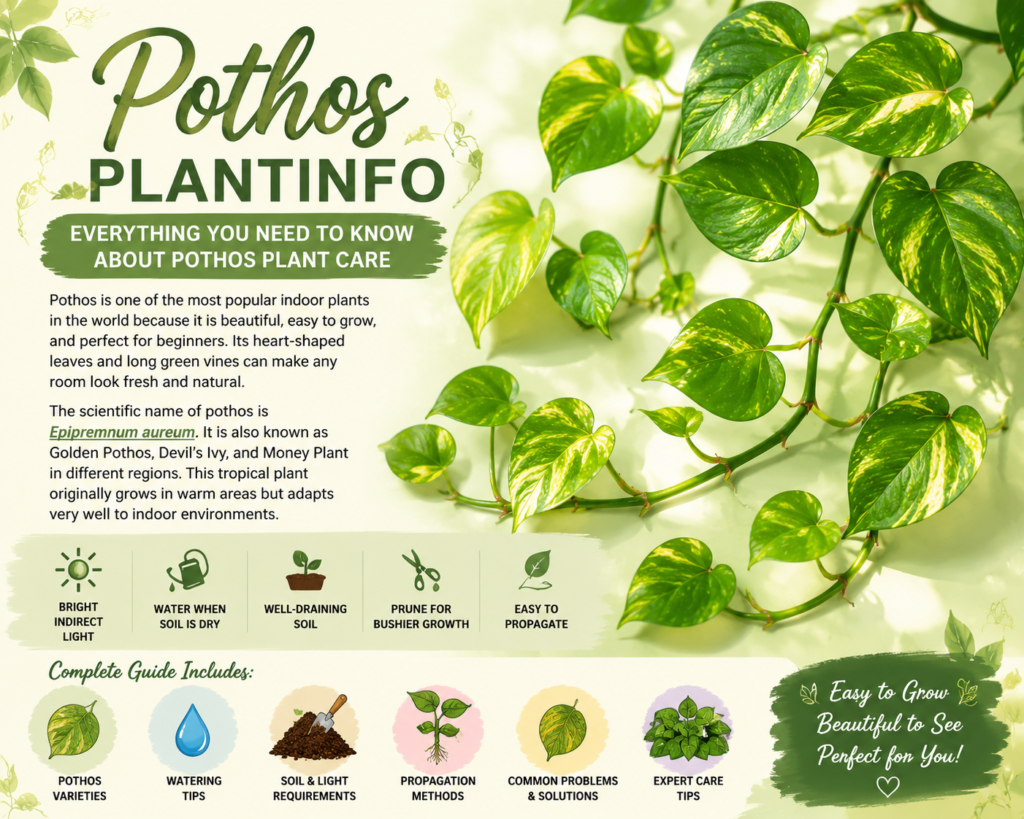
Pothos is one of the most popular indoor plants in the world because it is beautiful, easy to grow, and perfect for beginners. Its heart-shaped leaves and long green vines can make any room look fresh and natural.

Many people choose pothos because it does not require complicated gardening skills. With the right amount of light, water and basic care, this plant can grow happily for many years.

The scientific name of pothos is Epipremnum aureum. It is also known as Golden Pothos, Devil’s Ivy, and Money Plant in different regions. This tropical plant originally grows in warm areas but adapts very well to indoor environments.

This complete Pothos PlantInfo guide covers everything you need to know, including pothos varieties, watering, sunlight, soil, propagation, common problems and expert care tips.
# Learn How to Use a Moss Pole for Monstera and Why Monstera is a climbing tropical plant. In the wild, it grows upward along tree trunks and uses aerial roots to help anchor itself. Indoors, a moss pole can give the plant a similar type of climbing surface. A moss pole is not required for every Monstera. A young plant can grow without one, and some growers prefer a simple stake or trellis. However, a climbing support becomes useful when the stem starts leaning, spreading across the pot, or carrying large leaves. The right support can also make an indoor Monstera easier to manage. It gives the main stem a clear direction, helps keep the plant upright, and gives aerial roots a surface to contact. ## What a Moss Pole Is A moss pole is a vertical plant support covered or filled with moss. Sphagnum moss is commonly used because it can retain moisture. The pole is placed inside the plant pot, usually behind the main stem. The Monstera stem is then attached to the pole with soft plant ties. As the plant grows, its aerial roots may reach the moist moss and attach to it. This is similar to the way Monstera uses tree trunks for support in its native rainforest habitat. The University of Wisconsin–Madison recommends a strong, moss-covered support for Monstera so aerial roots can attach to it. ## Monstera's Climbing Growth Monstera deliciosa is a climbing or trailing plant native to tropical areas of Central America. In forests, it can climb tree trunks and grow toward higher parts of the canopy. The plant produces aerial roots from its stem. These roots can attach to nearby surfaces and, when they reach suitable conditions, can also grow into the ground. This climbing habit explains why a vertical support works well indoors. Instead of allowing a long stem to spread across a shelf or floor, the support gives it a place to grow upward. Penn State Extension also notes that moss sticks, trellises, bamboo stakes, and moss-covered boards can be used to support Monstera indoors. ## Why Monstera Benefits From a Moss Pole ### Better Stem Support A mature Monstera can become heavy as its leaves grow larger. Without support, the stem may lean or bend. A moss pole gives the main stem a firm surface to rest against. This is especially useful for plants with long stems and many leaves. ### A Place for Aerial Roots Aerial roots are a normal part of Monstera growth. They are not signs of poor care. When these roots reach a damp, textured moss surface, they may attach to it. This gives the plant another way to anchor itself as it grows. ### More Upright Growth Without support, a Monstera may spread sideways. With a pole, the main stem can be guided upward. This creates a more upright plant and can make better use of limited indoor space. ### Support for Mature Growth Leaf size and splits depend on several factors, including plant age, genetics, light, root health, water, and nutrition. A moss pole does not create large leaves by itself. Good growing conditions are still needed. The pole mainly gives the plant a suitable structure for climbing. University of Wisconsin–Madison notes that Monstera can grow very vigorously and may need support to prevent its stems from breaking. ## When to Add a Moss Pole There is no single age at which every Monstera needs a pole. A support becomes useful when you notice: * The main stem leaning to one side * Long growth hanging over the pot * Aerial roots growing from the stem * The plant becoming difficult to keep upright * Leaves becoming heavy for the stem * New growth needing a clear upward direction A small Monstera can stay without support until it starts developing a longer climbing stem. Adding the pole during repotting is often easier because the plant and soil can be arranged around the support. However, an existing plant can also receive a pole if it is placed carefully. ## Choosing the Right Moss Pole A good moss pole should be strong enough to support the plant as it becomes larger. Look for: * A firm center or sturdy outer structure * Good-quality sphagnum moss * Enough height for current growth * A design that can be extended if needed * A surface that aerial roots can contact * A base that can stay stable inside the pot The size should match the plant. A very short pole may need to be replaced quickly as the Monstera grows. For a large plant, stability matters even more because the leaves and stem can make the upper part heavy. ## Moss Pole Materials Sphagnum moss is one common choice, but it is not the only option. ### Sphagnum Moss Sphagnum can retain moisture and gives aerial roots a textured surface. Its main drawback is that it needs regular attention. If it becomes completely dry, it can become harder to wet again. ### Coco Coir Coco coir provides a textured surface and can give the stem good physical support. It usually holds less moisture than sphagnum moss. ### Wooden Support A wooden board or untreated branch can provide a surface for climbing. Penn State Extension lists boards and other supports among the options suitable for Monstera. ### Bamboo or Plain Stake A bamboo stake can keep the stem upright, but it does not provide the same moisture-holding surface as a moss pole. This makes it useful when the main goal is simply to prevent the plant from falling over. ## Preparing the Moss Pole If the pole contains dry sphagnum moss, moisten it before placing it with the plant. The moss should be damp rather than dripping wet. Squeeze out extra water if needed. Very wet moss can stay saturated for too long, while completely dry moss does not provide the same conditions for aerial root contact. ## Placing the Moss Pole in the Pot The pole should be placed close to the back of the Monstera's main stem. Push the base firmly into the potting mix so it does not wobble. The pole needs enough support at the base to carry the plant as it becomes taller. A weak or loose pole can tip when the plant becomes large. If you are repotting, placing the pole before filling the pot with the final layer of soil can make it easier to keep the support stable. ## Positioning the Monstera Look at the main stem before attaching it. The side of the stem with the nodes and aerial roots should face the moss pole. This gives the roots a better chance to reach the support. Do not force the entire plant against the pole. The goal is to guide the stem, not bend it into an unnatural position. ## Attaching the Main Stem Use soft plant tape, Velcro plant ties, or another soft material. Attach the **main stem**, not the leaf stalks. The tie should be loose enough to leave room for the stem to become thicker. Tight ties can press into the stem and cause damage as the plant grows. Penn State Extension recommends gently attaching Monstera to its support using its roots or stalk. A recent 2026 plant-care guide also recommends soft, loose ties and leaving the leaf stalks free to move. ## Training New Growth Once the main stem is attached, continue guiding new sections as the plant grows. Do not try to force every part of the plant against the pole at once. Instead: 1. Guide the newest section toward the pole. 2. Place a soft tie around the main stem. 3. Leave enough space for growth. 4. Allow the leaves to move freely. 5. Add another tie farther up when new growth develops. Over time, aerial roots may attach to the moss. Once a section has attached well, it may need less help from the ties. ## Caring for the Moss The moss should stay lightly moist if you want aerial roots to contact a damp surface. You can add water from the top of the pole and allow it to move through the moss. Check it regularly rather than following a fixed daily schedule. The exact frequency depends on room temperature, humidity, airflow, pole material, and season. The soil and the moss pole should be treated as two separate areas. Do not keep adding water to the pot simply because the pole feels dry. University of Wisconsin–Madison recommends watering the moss-covered support as well as the plant because aerial roots can obtain water and nutrients there. It also advises allowing the soil to dry slightly between waterings. ## Caring for the Monstera After Adding the Pole A moss pole does not replace normal Monstera care. The plant still needs suitable light, proper watering, good drainage, enough root space, and suitable temperatures. Bright light is especially useful for strong growth. Penn State Extension recommends bright light while protecting the plant from harsh direct sunlight. Keep checking the stem and ties as the plant grows. A tie that was loose several weeks ago can become tight later. Remove or adjust any tie that starts pressing into the stem. ## Aerial Roots and the Moss Pole Aerial roots can look unusual, especially when they become long. There is no need to cut them simply because they are visible. Some roots may reach the moss pole and attach. Others may grow away from it. Both situations can occur on a normal Monstera. If an aerial root is close to the pole, you can gently guide it toward the moss. Do not bend it sharply or force it into the moss. Aerial roots are part of the plant's climbing system, so handling them gently is the safest approach. ## Common Moss Pole Mistakes ### Using Tight Ties A tight tie can press into the growing stem. Use soft ties and leave room for the stem to expand. ### Attaching the Leaf Stalks The leaf stalks need freedom to move toward available light. Attach the main stem instead. ### Using a Pole That Is Too Short A fast-growing Monstera can quickly reach the top of a small pole. A stackable or extendable pole can make future growth easier to manage. ### Keeping the Moss Completely Dry Dry moss will not provide the same moist surface for aerial roots. Check it regularly and add water when needed. ### Keeping the Moss Constantly Soaked Too much water is not better. The moss should be damp, not permanently saturated. ### Expecting the Pole to Create Large Leaves A moss pole supports climbing, but it is not a magic method for producing giant leaves. Light, genetics, age, root health, water, nutrition, and overall plant care all affect leaf growth. ### Placing the Plant in Poor Light A pole cannot make up for weak lighting. If the Monstera does not receive enough light, its growth may remain slow even when it has excellent support. ## Moss Pole Compared With Other Supports | Support | Main purpose | Moisture for aerial roots | Best use | | ------------------ | --------------------- | ------------------------- | --------------------------------- | | Sphagnum moss pole | Climbing and support | Yes | Mature climbing Monstera | | Coco coir pole | Climbing and support | Some | Plants needing a textured surface | | Bamboo stake | Stem support | No | Young or leaning plants | | Wooden board | Climbing support | Usually no | Large climbing plants | | Trellis | General plant support | No | Plants that need structure | The best choice depends on what you want from the support. If you mainly want to stop the plant from falling, a simple stake may be enough. If you want to give aerial roots a moist surface for attachment, sphagnum moss offers an extra benefit. ## Moss Pole Care During Different Seasons ### Spring and Summer Monstera often grows more actively during warmer months. Check the pole more often because the moss may dry faster. Continue normal watering and feeding based on the plant's growth and care needs. ### Autumn Growth may begin to slow as light levels change. Check the moss before adding water. ### Winter Indoor air can become drier, especially when heating is used. At the same time, plant growth may slow. Do not keep the soil wet simply because the air is dry. Check the soil and moss separately. ## When a Moss Pole Is Not Needed A moss pole is optional. You may skip one if: * Your Monstera is still very small. * The plant is growing upright on its own. * You prefer a trailing shape. * You only need a simple stake for support. * You do not want to maintain moist moss. A Monstera can live without a moss pole when its other growing needs are being met. The main benefit of the pole is that it gives a climbing plant a vertical surface that matches its growth habit. ## Key Takeaways A moss pole gives Monstera a place to climb and helps keep its main stem upright. Its moist, textured surface can also give aerial roots a place to attach. For the best results, place the pole firmly in the pot, face the main stem toward it, and use soft ties around the stem. Keep the moss lightly moist without keeping it soaked. Most of all, remember that the pole is only one part of Monstera care. Good light, healthy roots, suitable watering, nutrition, and enough space are also needed for strong growth. Monstera naturally uses trees as climbing structures in tropical forests. Giving an indoor plant a moss-covered support lets it use part of that same climbing habit in your home.

What Is a Pothos Plant?

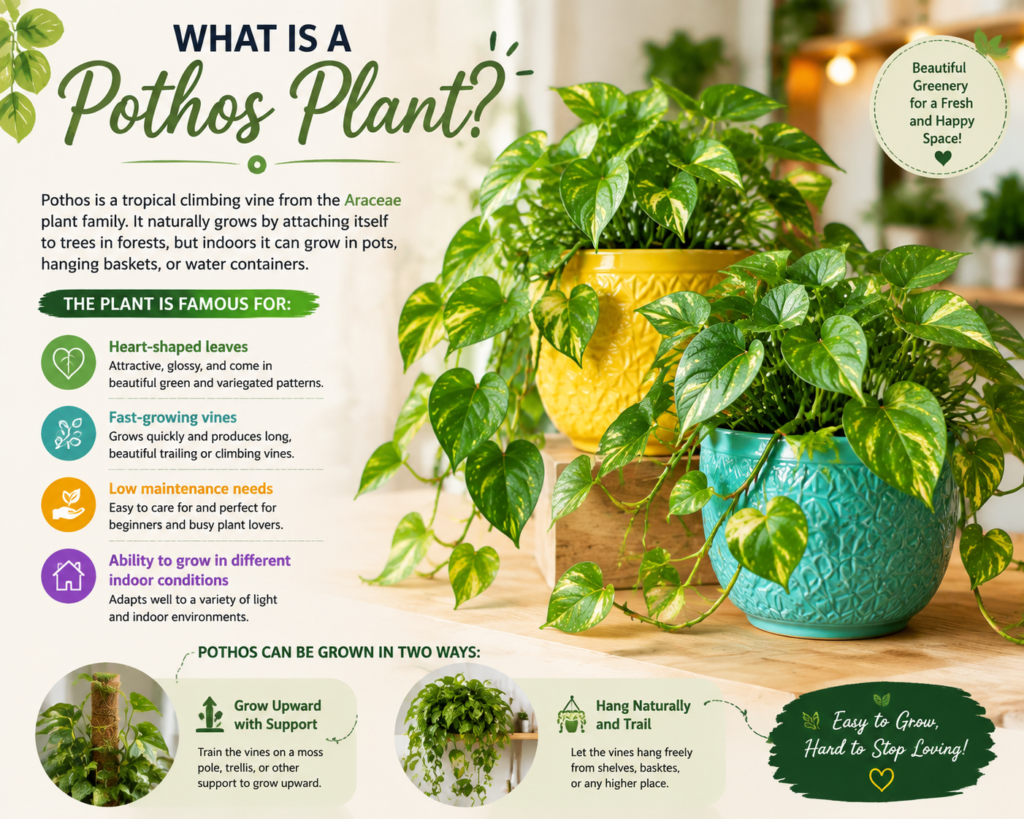
Pothos is a tropical climbing vine from the Araceae plant family. It naturally grows by attaching itself to trees in forests, but indoors it can grow in pots, hanging baskets or water containers.

The plant is famous for:

  • Heart-shaped leaves
  • Fast-growing vines
  • Low maintenance needs
  • Ability to grow in different indoor conditions

Pothos can be trained to grow upward with support or allowed to hang naturally from shelves and baskets.
23a6ef3c eed4 4235 ac3a e0d017643eba

Pothos Plant Light Requirements

Pothos grows best in bright indirect light.

This means the plant should receive plenty of natural light, but direct sunlight should not fall on the leaves for long periods.

Too much direct sunlight can cause the following:

  • Brown leaf spots
  • Leaf burning
  • Faded colors

Very low light can cause the following:

  • Slow growth
  • Smaller leaves
  • Less colorful patterns

The best location is near a window with filtered sunlight

How Often Should You Water Pothos?

Watering is one of the most important parts of pothos care.

Pothos does not like constantly wet soil. Overwatering is one of the biggest reasons why pothos plants become unhealthy.

A good watering method:

  1. Check the top 1–2 inches of soil.
  2. If the soil feels dry water the plant.
  3. Allow extra water to drain from the pot.

Signs of overwatering:

  • Yellow leaves
  • Soft stems
  • Bad smell from soil
  • Root problems

Signs of underwatering:

  • Drooping leaves
  • Dry soil
  • Curling leaves

Temperature and Humidity Requirements

Since pothos is a tropical plant it prefers warm and slightly humid conditions.

Ideal temperature:

65°F to 85°F (18°C to 29°C)

Avoid:

  • Cold drafts
  • Sudden temperature changes
  • Extremely dry air

Normal household humidity is usually enough but slightly higher humidity can help the plant grow better.

Pothos Plant Information Table

Pothos Plant Feature Details

Pothos, Golden Pothos, Devil’s Ivy

Epipremnum aureum
Difficulty: Easy for beginners
Family
Araceae
Plant Type
Tropical evergreen vine
Origin
Southeast Asia
Growth Speed
Fast
Light Requirement
Bright indirect light
Water Requirement
Moderate
Soil Type
Well-draining soil
Best Temperature
65°F–85°F (18°C–29°C)
Propagation Method
Stem cutting

Benefits of Growing Pothos Indoors

Pothos is not only attractive but also provides several benefits:

Easy Home Decoration

Its green leaves add natural beauty to rooms offices and study areas.

Beginner-Friendly Plant

It is one of the best choices for people who are new to indoor gardening.

Improves Indoor Green Space

Adding plants indoors can create a more comfortable and relaxing environment.

Frequently Asked Questions About Pothos Plant

1. How often should I water a pothos plant?

Water your pothos when the top layer of soil becomes dry. Usually, this is around once every 1–2 weeks, but it depends on your home conditions.

Pothos can survive in lower light areas, but it still needs some indirect light to grow properly.

With good care, pothos is a fast-growing plant and can produce new leaves regularly during the growing season.

4. Can pothos grow in water only?

Yes, pothos can grow in water for a long time. However, plants grown permanently in soil usually receive more nutrients.

Leaf loss can happen because of:

  • Overwatering
  • Poor lighting
  • Temperature stress
  • Root problems

Check the plant’s growing conditions.

Leave a Comment

Your email address will not be published. Required fields are marked *