Pothos PlantInfo: Everything You Need to Know About Pothos Plant Care
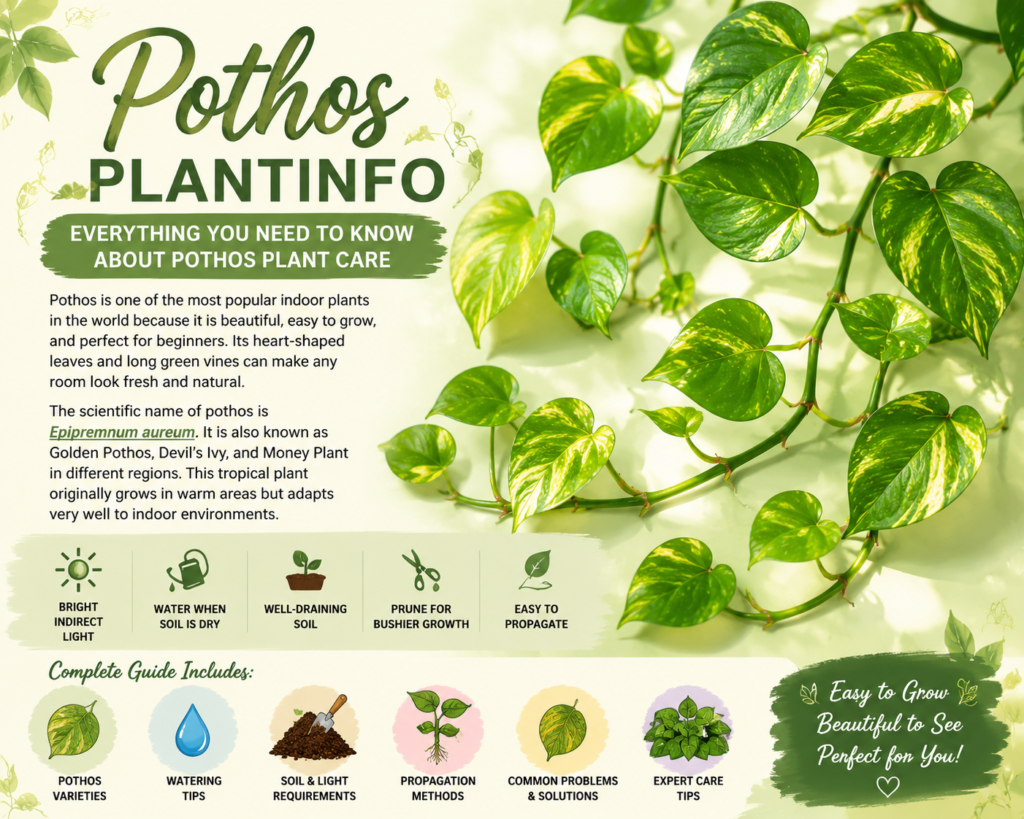
Pothos is one of the most popular indoor plants in the world because it is beautiful, easy to grow, and perfect for beginners. Its heart-shaped leaves and long green vines can make any room look fresh and natural.
Many people choose pothos because it does not require complicated gardening skills. With the right amount of light water and basic care this plant can grow happily for many years.
The scientific name of pothos is Epipremnum aureum. It is also known as Golden Pothos, Devil’s Ivy, and Money Plant in different regions. This tropical plant originally grows in warm areas but adapts very well to indoor environments.
This complete Pothos PlantInfo guide covers everything you need to know including pothos varieties watering sunlight soil propagation common problems, and expert care tips.
What Is a Pothos Plant?
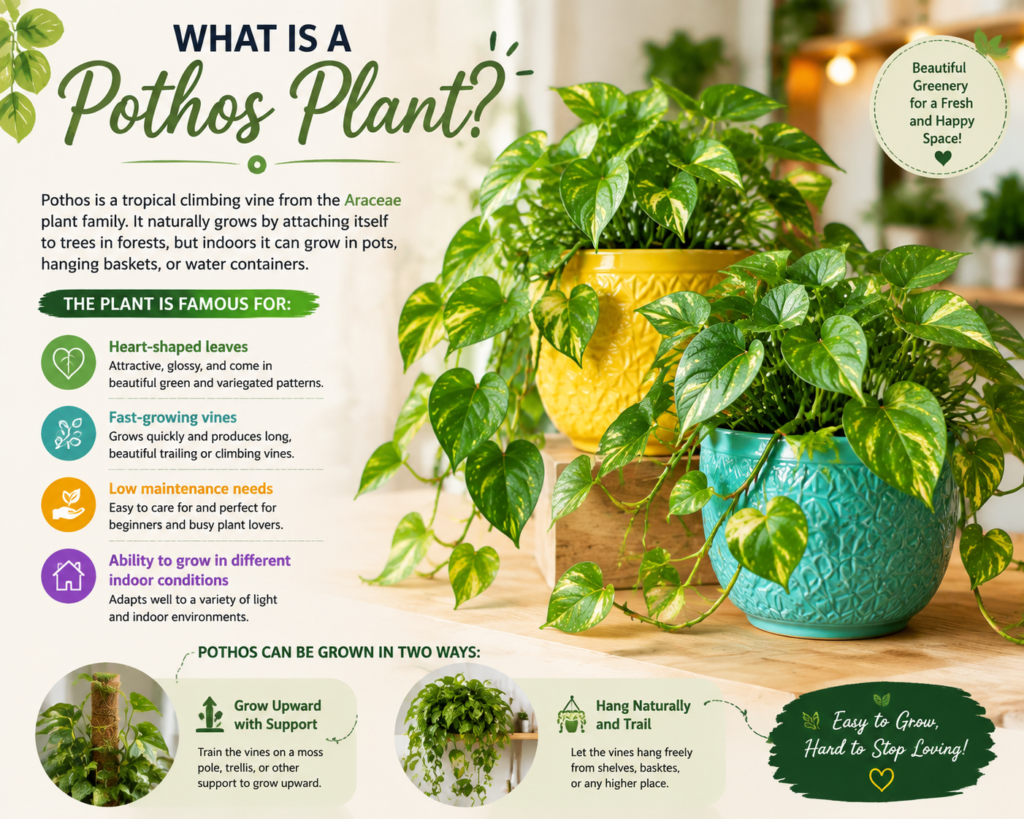
Pothos is a tropical climbing vine from the Araceae plant family. It naturally grows by attaching itself to trees in forests, but indoors it can grow in pots hanging baskets or water containers.
The plant is famous for:
- Heart-shaped leaves
- Fast-growing vines
- Low maintenance needs
- Ability to grow in different indoor conditions
Pothos can be trained to grow upward with support or allowed to hang naturally from shelves and baskets.
Pothos Plant Light Requirements
Pothos grows best in bright indirect light.
This means the plant should receive plenty of natural light, but direct sunlight should not fall on the leaves for long periods.
Too much direct sunlight can cause:
- Brown leaf spots
- Leaf burning
- Faded colors
Very low light can cause:
- Slow growth
- Smaller leaves
- Less colorful patterns
The best location is near a window with filtered sunlight
How Often Should You Water Pothos?
Watering is one of the most important parts of pothos care.
Pothos does not like constantly wet soil. Overwatering is one of the biggest reasons why pothos plants become unhealthy.
A good watering method:
- Check the top 1–2 inches of soil.
- If the soil feels dry water the plant.
- Allow extra water to drain from the pot.
Signs of overwatering:
- Yellow leaves
- Soft stems
- Bad smell from soil
- Root problems
Signs of underwatering:
- Drooping leaves
- Dry soil
- Curling leaves
Temperature and Humidity Requirements
Since pothos is a tropical plant it prefers warm and slightly humid conditions.
Ideal temperature:
65°F to 85°F (18°C to 29°C)
Avoid:
- Cold drafts
- Sudden temperature changes
- Extremely dry air
Normal household humidity is usually enough but slightly higher humidity can help the plant grow better.
Pothos Plant Information Table
Pothos, Golden Pothos, Devil’s Ivy
Benefits of Growing Pothos Indoors
Pothos is not only attractive but also provides several benefits:
Easy Home Decoration
Its green leaves add natural beauty to rooms offices and study areas.
Beginner-Friendly Plant
It is one of the best choices for people who are new to indoor gardening.
Improves Indoor Green Space
Adding plants indoors can create a more comfortable and relaxing environment.
Frequently Asked Questions About Pothos Plant
1. How often should I water a pothos plant?
Water your pothos when the top layer of soil becomes dry. Usually, this is around once every 1–2 weeks, but it depends on your home conditions.
2. Can pothos grow without sunlight?
Pothos can survive in lower light areas, but it still needs some indirect light to grow properly.
3. How fast does pothos grow?
With good care, pothos is a fast-growing plant and can produce new leaves regularly during the growing season.
4. Can pothos grow in water only?
Yes, pothos can grow in water for a long time. However, plants grown permanently in soil usually receive more nutrients.
5. Why is my pothos losing leaves?
Leaf loss can happen because of:
- Overwatering
- Poor lighting
- Temperature stress
- Root problems
Check the plant’s growing conditions.