How to Care for Pothos: Lighting, Watering, and Soil
Pothos is one of the easiest house plants you can grow at home. Many people call it Devil’s Ivy because it is almost impossible to kill. Even if you forget to water it once in a while, it stays strong. However, if you want your plant to grow thick, green, and shiny leaves, you need to understand three basic things: light, water, and soil.
At Pothos PlantInfo, we help you keep your indoor plants healthy with simple, real-world advice that actually works.
Finding the Right Light for Your Pothos
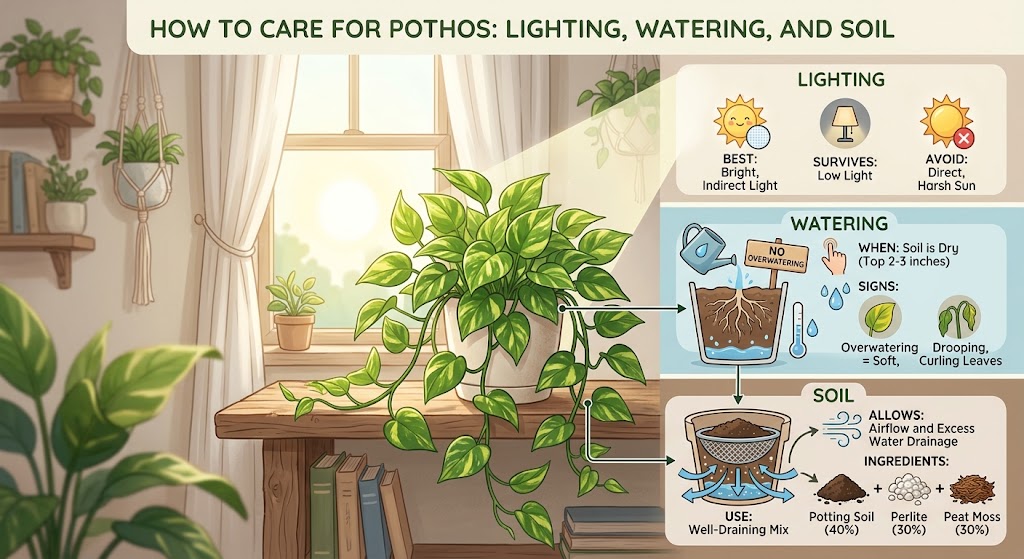
Light gives your plant the energy it needs to make leaves and grow long vines. While Pothos can live in many different spaces putting it in the right spot makes a big difference
Bright Indirect Light is Best
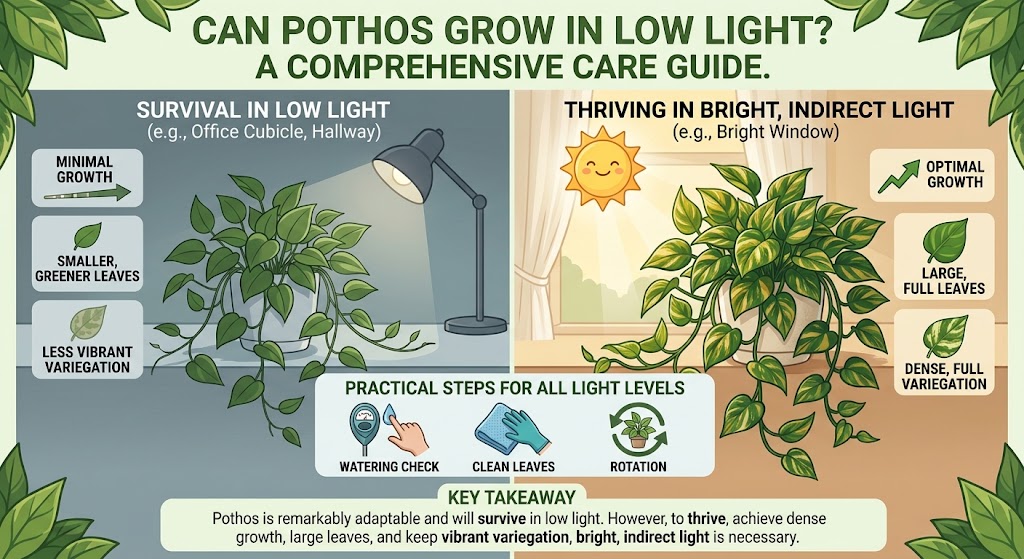
The happiest Pothos plants live in bright, indirect sunlight. This means the plant sits in a bright room where sun rays do not hit the leaves directly. Near an east-facing window or a few feet away from a south-facing window works best.
Can Pothos Grow in Low Light?
Yes, Pothos can survive in low-light areas like offices, hallways, or rooms with small windows. However, its growth will slow down. If you have a variegated Pothos (a type with white or yellow spots on the leaves), low light might cause those colorful patterns to fade back to solid green.
Sunlight to Avoid
Never leave your plant under direct, hot sunlight for hours. Strong sun burns the leaves, leaving brown, dry patches that do not heal.
| Light Type | How It Affects Your Plant | Best Location |
| Bright, Indirect | Fast growth, vibrant leaf colours | Near an east-facing window |
| Low Light | Slower growth, lighter leaves turn green | Hallways, dark rooms |
| Direct Sunlight | Scorched, burnt, dry leaves | Avoid putting it directly on sunny sills |
How to Water Pothos Without Damaging the Roots
Watering mistakes are the number one reason indoor plants struggle. Most people give their plants too much water rather than too little.
The Touch Test Method
Before grabbing your watering can, check the soil with your finger. Push your finger about two inches down into the dirt.
-
If the soil feels dry and cool, it is time to water.
-
If the soil feels damp or sticks to your finger, wait a few more days.
Signs You Are Overwatering
Giving your plant water when the soil is already wet blocks air from reaching the roots. Look out for these signs:
-
Yellow leaves that feel soft or mushy.
-
Black, soft stems near the soil line.
-
Soil that smells sour or old.
Choosing the Right Soil Mix
Soil holds water and gives your plant roots room to breathe. Regular backyard dirt is too heavy for potted plants because it packs down tight and traps too much moisture.
What Makes Good Pothos Soil?
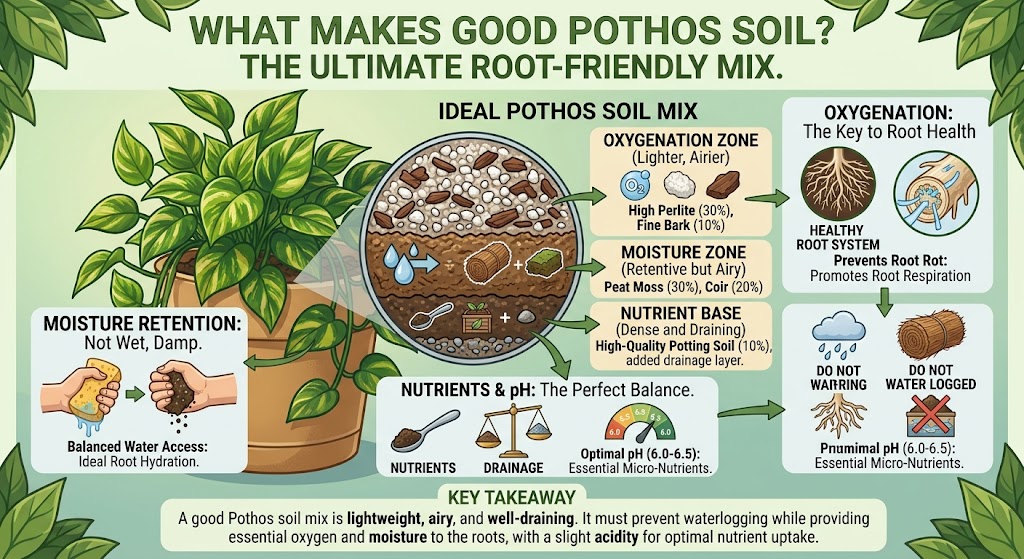
Pothos plants need soil that stays slightly damp but drains extra water fast. Look for standard indoor potting soil and check for these ingredients:
-
Peat moss or Coco coir: Helps hold just enough moisture.
-
Perlite: Small white volcanic rocks that create air pockets and improve drainage.
-
Bark pieces: Keeps the soil light so roots can spread easily.
If your soil stays wet for more than a week after watering, mix in a handful of perlite to help it dry out faster.
Simple Troubleshooting Table
| What You See | The Cause | Easy Fix |
| Yellowing leaves | Too much water | Let the soil dry out completely before watering again. |
| Drooping vines | Needs water | Give it a good soak until water drains out the bottom. |
| Pale, washed-out leaves | Too much direct light | Move the plant a few feet back from the window. |
| Brown leaf tips | Air is too dry | Mist the leaves occasionally or keep away from air vents. |
Frequently Asked Questions (FAQs)
How often should I water my Pothos plant?
Water your Pothos every 1 to 2 weeks, depending on the sunlight and humidity in your home. Always check the top 2 inches of soil first—if it feels dry to the touch, it is time to water.
Can Pothos live in rooms without windows?
Pothos can survive in low-light conditions, but they need some light source to grow. If your room has no natural sunlight, you can use regular artificial LED lights or grow lights to keep the plant healthy.
Why are the leaves on my Pothos turning yellow?
Yellow leaves are usually a sign of overwatering. When the roots sit in wet soil for too long, they cannot breathe. Let the soil dry out completely before watering again.
What is the best pot size for a Pothos?
Choose a pot that is only 1 to 2 inches larger than the plant’s root ball. Make sure the pot has drainage holes at the bottom so extra water can easily flow out.
Is Pothos safe for pets like cats and dogs?
No, Pothos plants contain insoluble calcium oxalates, which are toxic to cats and dogs if chewed or eaten. Keep the plant on high shelves or in hanging planters out of reach of pets.
