
Creative Ways to Display Pothos Plants Without Pots
Pothos plants are famous for being almost impossible to kill. Their heart-shaped leaves and trailing vines make them a favourite for both beginners and experienced plant lovers. But if you are tired of plain plastic or ceramic pots sitting on shelves, you are not alone.
Growing and decorating with Pothos outside of a traditional pot is not only possible—it can actually make your plant healthier and your living space look incredible.
Here are the best, hands-on ways to display your Pothos without using a standard pot, along with practical tips to keep them thriving long-term.
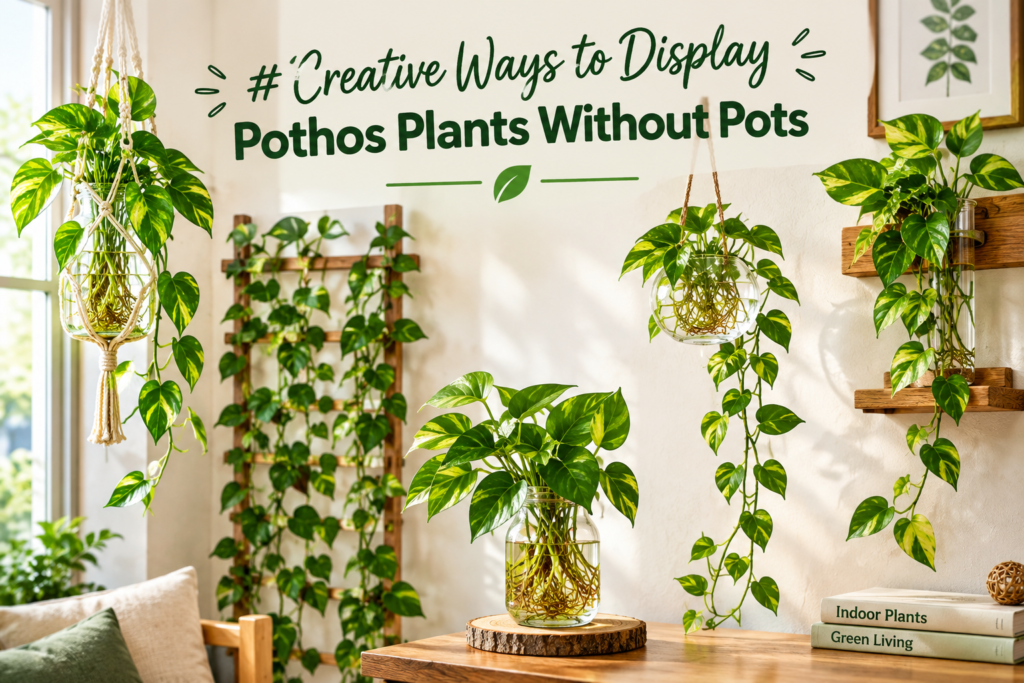
Moss Poles and Coco Coir Totems
In their natural habitat Pothos plants do not grow flat on the ground or hang down. They climb up large forest trees. When a Pothos vine climbs upward, its leaves naturally grow larger, thicker, and more vibrant.
Instead of a pot, you can root your Pothos in a compact moss ball or wrap its aerial roots directly around a moist moss pole anchored in a decorative base.
Why it works: The aerial roots grip the damp sphagnum moss, absorbing water and nutrients directly through the air.
Best placement: Near a bright window with soft, indirect sunlight.
Care tip: Mist the moss pole every few days to keep it slightly damp so the roots stay attached.
Water Propagation in Glass Tubes and Bottles
Pothos is one of the few house plants that can live permanently in clean water. You do not need soil at all.
You can use clear glass test tubes mounted on wood, recycled vintage soda bottles, or glass propagation stations mounted on a wall.
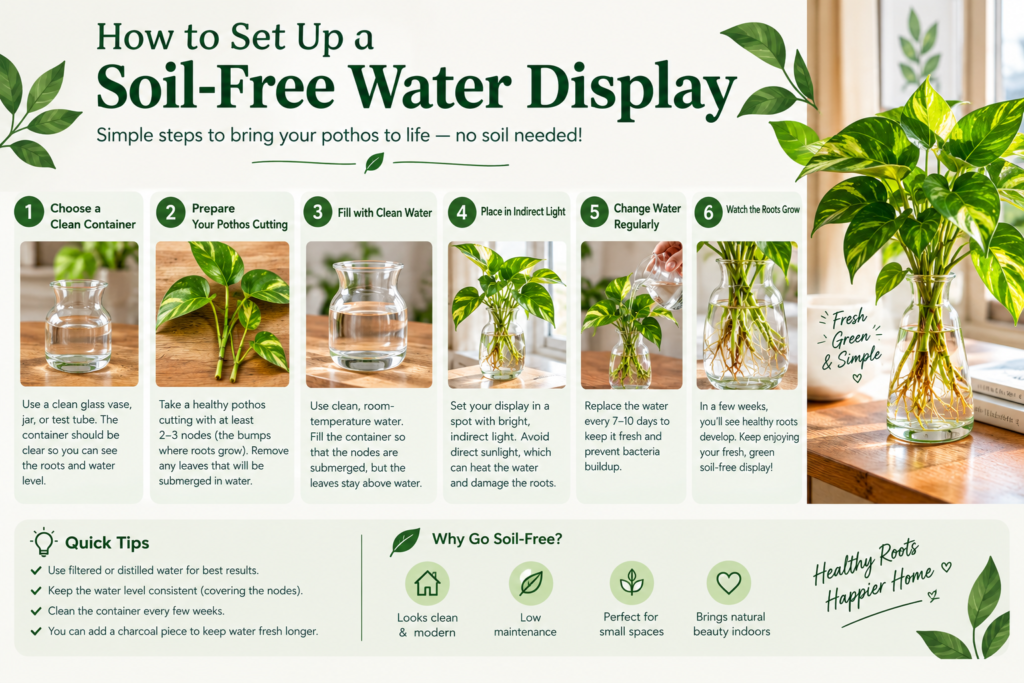
How to set up a soil-free water display
Cut a healthy vine just below a root node (the small brown bump on the stem).
Place the stem in a glass container filled with clean, room-temperature water.
Make sure only the stem and node are underwater, not the leaves.
Place the container where it gets bright, indirect light.
Mounted Wood Boards (Living Wall Art)
If you love the look of natural wood, mounting your plant on a flat wooden plank creates a piece of living wall art. This method is inspired by how wild tropical plants grow attached to tree bark.
To do this, gardeners use a small mound of moist sphagnum moss around the roots and secure the plant to a piece of cedar or driftwood using invisible fishing line or coated wire.
Best wood types: Cedar, teak, or treated driftwood (these resist rotting from moisture).
How to water: Take the entire board off the wall once a week and soak the moss base in a sink for 10 minutes. Let it drip dry completely before hanging it back up.
Comparing Soil-Free Display Methods
Here is a quick breakdown to help you choose the best display option for your home space and maintenance routine:
| Display Method | Maintenance Level | Water Frequency | Ideal Home Location |
| Glass Water Tubes | Very Low | Change water every 7–10 days | Windowsills, desks, wall shelves |
| Moss Poles | Medium | Mist every 2–3 days | Bright room corners |
| Kokedama Moss Balls | Medium | Soak once a week | Near windows, ceiling hooks |
| Mounted Wood Planks | High | Soak moss base weekly | Feature walls with indirect light |
| Felt Wall Pockets | Low to Medium | Water 1–2 times a week | Feature walls, patio spaces |
Common Mistakes to Avoid
-
Using hard tap water: Heavy chlorine or fluoride in tap water can cause the tips of Pothos leaves to turn brown. Let tap water sit in an open container overnight before using it, or use distilled water.
-
Neglecting plant food: Plants in water or moss do not have soil nutrients. Use a balanced liquid fertiliser diluted to quarter-strength during spring and summer.
-
Overcrowding root nodes: Ensure air can flow freely around the stems to prevent mould and rot.
Can a Pothos plant live forever in water without soil?
Yes, Pothos plants can live for years directly in water if they receive bright, indirect light. However, because water lacks natural soil nutrients, you need to change the water every 7 to 10 days and add a drop of diluted liquid fertiliser once a month.
How do you keep moss poles moist for climbing Pothos?
You can keep a moss pole moist by spraying it with a water mister every 2 to 3 days. Another simple trick is to invert a small water bottle with a pinhole at the top of the pole so it slowly drips water into the moss.
Will my Pothos leaves grow bigger without a pot?
Pothos leaves grow much larger when the plant is allowed to climb upward using its aerial roots, such as on a moss pole or wooden plank. When vines hang down, the leaves usually stay smaller.
Why are the leaves of my non-potted Pothos turning yellow?
Yellow leaves are usually caused by overwatering (if grown in moss), poor water quality (using tap water with chlorine), or a lack of bright, indirect sunlight.
Is Kokedama easy to maintain for beginners?
Yes, Kokedama is beginner-friendly. You only need to soak the moss ball in a bowl of room-temperature water for about 10 minutes whenever it feels light and dry to the touch.
