Brown Tips on Pothos Leaves what Do They Mean
Brown tips on pothos leaves are a common sign of plant stress. The tips may look dry, crispy, or darker than the rest of the leaf. Sometimes the brown area stays small while in other cases it spreads along the leaf edges.
Brown tips do not always mean that your plant has a serious disease. They often happen because the plant is not getting the right amount of water the air is too dry or minerals have built up in the potting mix.
The most useful step is to check the soil light and condition of the leaves before changing your care routine.

Common Causes of Brown Tips on Pothos Leaves
Possible cause | What you may notice | What to do |
|---|---|---|
Underwatering | Dry soil and crispy leaf edges | Water thoroughly when the soil needs it |
Low humidity | Dry tips, especially in very dry rooms | Improve room humidity if needed |
Too much direct sunlight | Brown patches or scorched areas | Move the plant to bright, indirect light |
Mineral or fertilizer buildup | Brown tips despite regular watering | Flush the soil with water if drainage is good |
Overwatering and root damage | Yellow leaves, wet soil, weak growth | Check the roots and improve drainage |
Natural aging | One or two older leaves turning brown | Remove fully damaged leaves if needed |
Can Tap Water Cause Brown Tips
It can. Some tap water contains minerals or chemicals that may contribute to leaf-tip damage in sensitive plants. However, tap water is not always the cause, and brown tips alone cannot confirm a water-quality problem.
If you have ruled out watering mistakes and harsh sunlight, try using filtered water or another suitable water source for a few weeks. Avoid adding more fertilizer until you understand what is happening.
How to Fix Brown Tips on Pothos Leaves
Follow these five simple steps to find the cause of brown tips and help your pothos grow healthy new leaves.
Check the Soil
If the soil is very dry, water the plant thoroughly and let excess water drain. If it stays wet for several days, check the drainage and inspect the roots.
Review the Light
Place pothos in bright, indirect light. Avoid strong afternoon sunlight shining directly on the leaves because it can cause leaf damage.
Check the Humidity
If your room is very dry, a humidifier can help. Light misting usually does not increase humidity for long, so do not rely on it as the main solution.
Look for Mineral Buildup
If you suspect excess fertilizer salts, flush the potting mix with clean water only when the pot drains freely. Let all excess water escape.
Trim Damaged Tips
Use clean scissors to trim brown tips along the natural shape of the leaf. Brown tissue will not turn green again, but new growth may look healthier after you fix the cause.
Tip: Brown tips can have several causes. Check the soil, light, and overall plant health before changing your watering routine.
Root Rot in Pothos: What Is It
Root rot is damage to the roots that often develops when the potting mix stays too wet for too long. Roots need both water and oxygen. When the soil remains waterlogged, roots may not get enough oxygen, and harmful organisms can damage them.
Healthy pothos roots are usually firm and may look white, cream, or light brown, depending on the soil and their age. Rotten roots often look dark brown or black, feel soft, and may fall apart when touched.
Root rot can spread if the plant stays in wet soil. If you notice the signs early, you may still be able to save your pothos.

Signs of Root Rot in Pothos
Check these common warning signs to understand whether your pothos may have root rot.
| Sign | What It May Mean |
|---|---|
| Yellow leaves | Roots may not be taking up water and nutrients properly. |
| Soft, dark roots | Root tissue may be rotting, especially if the roots feel mushy or fall apart easily. |
| Soil smells sour or rotten | The potting mix may be staying too wet for too long. |
| Drooping leaves while soil is wet | Damaged roots may be unable to supply enough water to the leaves. |
| Slow or stopped growth | The plant may be under stress or struggling with damaged roots. |
| Soft stems near the soil | Damage may be affecting the base of the plant. |
Plant care tip: One symptom alone does not confirm root rot. Check the roots and soil together before deciding what your pothos needs.
What Causes Root Rot in Pothos?
The most common cause is soil that stays wet for too long. Several things can lead to this problem:
Watering again before the soil has started to dry.
Using a pot without drainage holes.
Growing pothos in dense soil that holds too much water.
Keeping the plant in a cool, dim location where the soil dries slowly.
Leaving water sitting in a decorative outer pot or saucer.
A large pot can also hold more wet soil than a small root system can use. This means the soil may stay damp for longer than expected
How to Identify and Save a Damaged Pothos Plant
If you think your pothos has root rot, do not panic. A plant with some damaged roots can often recover if enough healthy roots and stems remain.
Follow these steps to check the damage and give the plant a better chance of recovery.

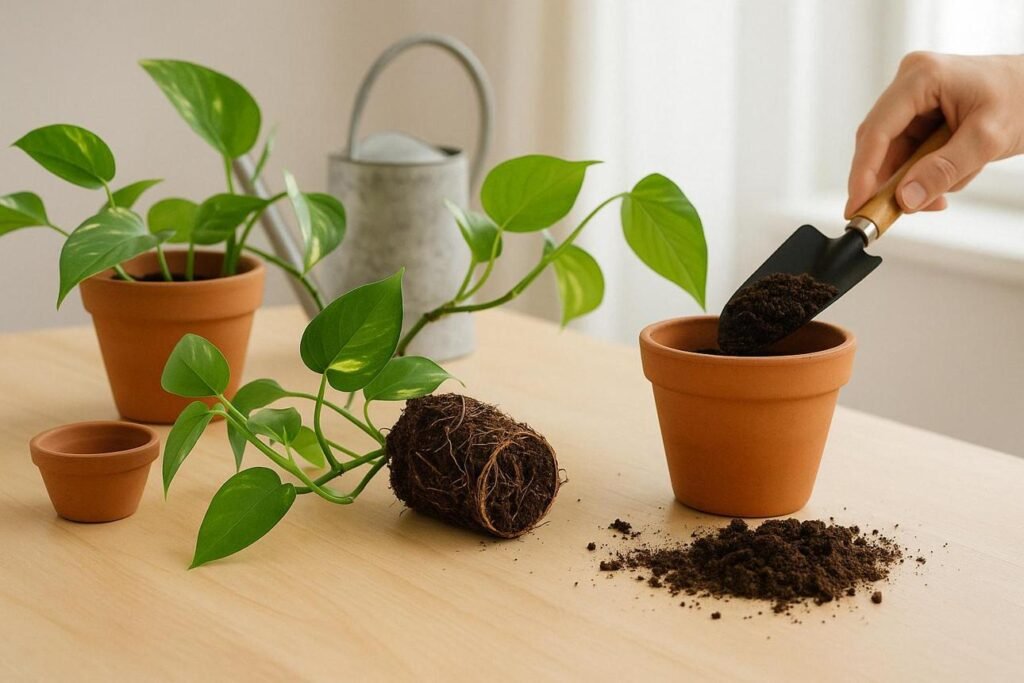
Remove the Plant From Its Pot
Gently slide the pothos out of its pot. If the root ball is stuck, loosen the soil around the edges instead of pulling hard on the stems.
Look closely at the roots. Healthy roots feel firm, while rotten roots often feel soft, slimy, or hollow. Some healthy roots may be light brown because of soil staining, so do not remove roots based on color alone.
Remove the Rotten Roots
Use clean, sharp scissors to remove roots that are clearly soft, mushy, or badly damaged. Cut back to firm tissue, and clean the scissors before moving to another section.
Try to keep as many healthy roots as possible. Removing every root that looks slightly brown can cause more damage than necessary.

Clean the Roots and Pot
Gently remove old, wet soil from the remaining roots. You can rinse them with clean water if needed to see which roots are healthy.
Clean the pot before reusing it. If the old potting mix smells rotten or has stayed waterlogged, discard it rather than mixing it into fresh soil.
Repot in Fresh Well-Draining Soil
Choose a clean pot with drainage holes. It should fit the remaining root system without leaving a huge amount of unused soil around it.
Use fresh, airy potting mix that holds some moisture but allows excess water to drain. A suitable indoor potting mix amended with perlite or fine orchid bark can improve airflow, depending on the materials available.
Watch for New Growth
Recovery takes time. Some older leaves may remain yellow or damaged, and they may not return to their original condition.
Look for signs such as firmer stems, fewer new yellow leaves, and fresh growth. Check the soil moisture regularly, but avoid pulling the plant out of its pot repeatedly to inspect the roots.
If most roots are rotten, you may need to take healthy stem cuttings with nodes and propagate them as a backup.
Brown Tips or Root Rot: How Can You Tell the Difference?
Brown tips and root rot can sometimes happen together, but they are not the same problem. Brown tips affect the leaf tissue, while root rot damages the roots.
Use this comparison to decide what to check first.
| What to Check | Brown Leaf Tips | Root Rot |
|---|---|---|
| Main Area Affected | Leaf tips and edges | Roots, sometimes stems and leaves |
| Typical Appearance | Dry, crispy brown tissue | Soft, dark, damaged roots |
| Soil Condition | May be too dry or otherwise unsuitable | Often stays wet for too long |
| Other Signs | Dry air or sun damage may be present | Yellow leaves, drooping, or a possible bad smell |
| First Action | Check watering, light, humidity, and mineral buildup | Inspect roots and improve drainage |
| Can the Damaged Part Turn Green Again? | No. Dead brown leaf tissue will not turn green again. | Damaged roots do not heal back into healthy tissue. New roots may grow if the plant recovers. |
How to Prevent Brown Tips and Root Rot
Good daily care can help prevent both problems. You do not need a complicated routine; the key is to understand what your plant needs and avoid keeping its roots too wet.

FAQS
Should I cut brown tips off pothos leaves?
Yes, trim brown tips with clean scissors, but leave the healthy green parts of the leaves.
Can brown tips on pothos leaves turn green again?
No, brown leaf tissue cannot turn green again, but healthy new leaves can grow.
How do I know if my pothos has root rot?
Look for soft, dark roots yellow leaves, wet soil, and a sour smell.
Can overwatering cause brown tips on pothos?
Yes, overwatering can damage roots and cause brown tips, yellow leaves, and drooping.
Should I water pothos after removing rotten roots?
Yes, water lightly after repotting and let all excess water drain before watering again when needed.
